
How to Prevent Termites in New Construction in Texas — A Complete Guide
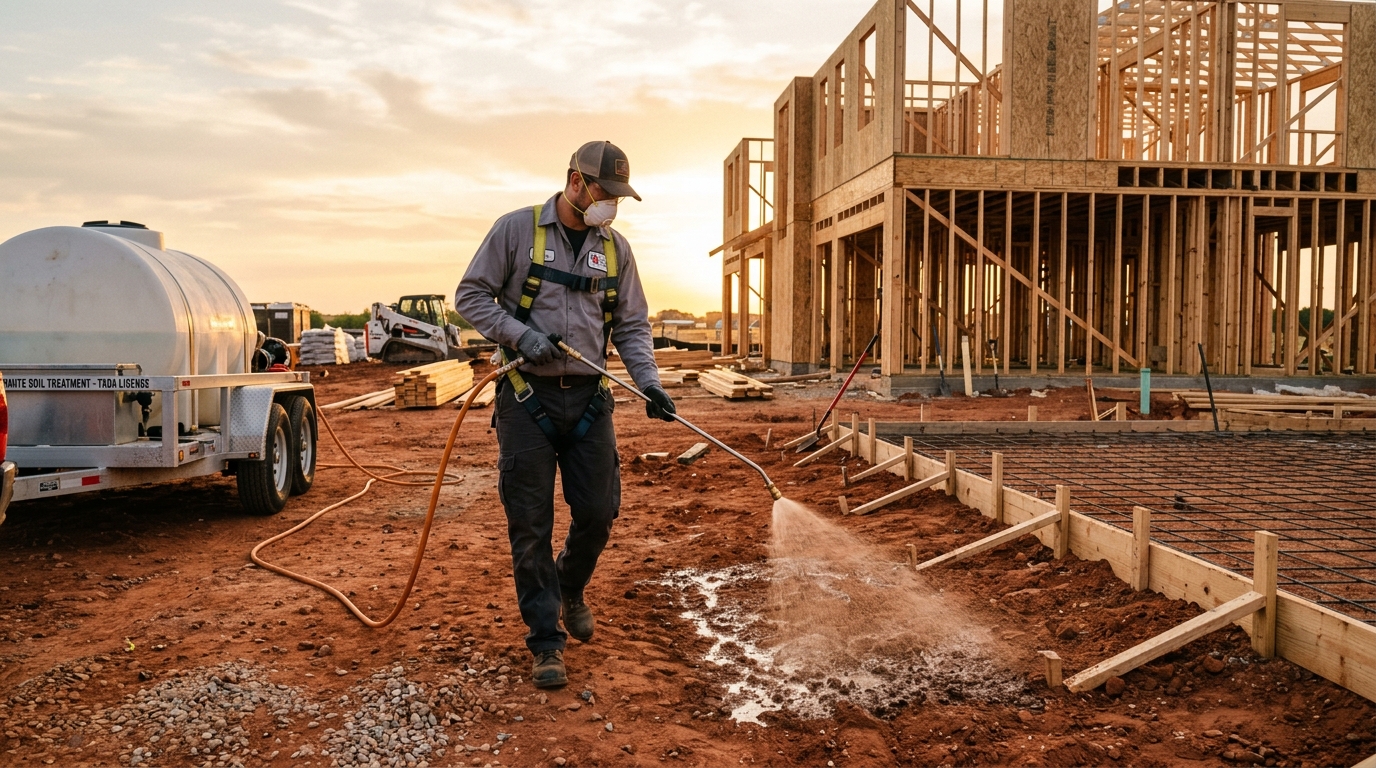
Buying or building a new home in Texas should come with termite protection built in — but "should" and "does" are not the same thing. Many new construction homes in Walker County and the surrounding region have inadequate termite protection, and some have none at all. Here is what adequate protection looks like, what to ask your builder, and what steps to take if your new home was built without it.
Why New Construction Is Particularly Vulnerable
There is a counterintuitive termite risk that affects new construction specifically. When land is cleared and excavated for a new home, the existing termite colonies in the soil don't disappear. They're displaced. Mature subterranean termite colonies in the disturbed soil relocate to find undisturbed ground and new food sources. A freshly framed structure sitting on recently disturbed soil, with exposed lumber and no chemical protection, is exactly what those displaced colonies encounter.
In high termite pressure areas — which includes most of East Texas, Walker County, and the surrounding counties — this is a documented phenomenon that accounts for a significant portion of early-phase infestations in new construction.
What Pre-Construction Termite Treatment Involves
Pre-construction termite treatment — required by most lenders and building codes for slab construction in Texas — is a soil treatment applied before the concrete is poured. The process has several stages:
- Sub-slab soil treatment: After the grade is established and the vapor barrier is laid, a liquid termiticide is applied to the soil that will be under the slab. This creates a chemical zone in the soil that termites cannot pass through undetected. Non-repellent termiticides (fipronil-based products like Termidor) are preferred because they don't cause termites to route around the treated zone.
- Foundation perimeter treatment: After the slab is poured, the soil at the exterior perimeter of the foundation is treated. This is the secondary barrier that stops termites approaching from outside.
- Plumbing penetration treatment: Each point where plumbing enters the structure from below is treated, because these penetrations are the primary termite entry point in slab construction.
- Treatment certificate: The treating company issues a certificate documenting what was applied, where, and at what concentration. This certificate is part of the building record and should be retained by the homeowner.
What to Ask Your Builder
If you're purchasing new construction in Walker County or East Texas, these are the specific questions to ask before closing:
- "Who performed the pre-construction termite treatment?" — You want a named licensed company, not "we had it treated."
- "Can I see the treatment certificate?" — The certificate should show the applicator's license number, the product used, the application dates, and the square footage treated. If one doesn't exist, that's a significant gap.
- "How long is the warranty on the treatment?" — Pre-construction soil treatments are typically warrantied for 1 year. After that, a retreatment or ongoing monitoring agreement is recommended.
- "Was the treatment applied before or after the slab was poured?" — It must be before the slab for sub-slab treatment to be effective. Treatment applied after the pour to the perimeter only is partial protection.
- "Was it a repellent or non-repellent product?" — Non-repellent (fipronil, chlorantraniliprole) is the current best practice. Repellent products (bifenthrin, permethrin) create pressure that can route termite foraging around the treated zone.
What to Do If Your New Home Was Not Treated
If you purchased a new home and learn it was not treated, or the treatment certificate cannot be produced, the appropriate step is a post-construction termite treatment — a perimeter trench-and-treat around the existing slab combined with treatment at plumbing penetration points. This is less ideal than pre-construction treatment because the soil directly under the slab cannot be accessed, but it is the standard remediation approach.
Cost for post-construction treatment of a new home in Walker County runs approximately $600–$1,400 depending on home size. That's a small number relative to the cost of termite damage repairs — which average $3,000 nationally and can run significantly higher if framing damage has accumulated.
Protection After You Move In
Even a properly treated new home requires ongoing management:
- First year inspection: Have the home inspected by an independent specialist 12 months after treatment. This confirms the treatment is holding and catches any activity that has bypassed the barrier.
- Annual inspection thereafter: In high-pressure areas (which includes Walker County), annual inspection is the standard recommendation. Treatment barriers degrade over 5–10 years; early detection of barrier failures is far less expensive than treating an active infestation.
- Bait station installation: Some homeowners choose to install a permanent bait station perimeter as supplemental protection and ongoing monitoring. This is particularly appropriate if the property has adjacent timber, stumps, or high moisture conditions.
- Moisture control: Eliminate conditions that attract termites — repair any plumbing leaks promptly, ensure gutters drain away from the foundation, keep mulch beds back from the slab edge, and don't stack firewood against the house.
If you're building or have recently built in the Huntsville, TX area and have questions about pre-construction treatment or post-construction inspection, call 936-935-0197 or learn about our pre-construction treatment services.
Key Takeaways
- Soil disturbance during new construction displaces termite colonies — new homes are at elevated risk in the first few years.
- Pre-construction soil treatment is standard but not universal — always ask for the certificate.
- Non-repellent products (fipronil-based) are current best practice; repellent products create routing risk.
- Post-construction treatment is available if treatment was skipped — it's not ideal but it's effective.
- Annual inspection after move-in is the most cost-effective protection strategy for new construction.
Protect Your Home
Before It's Too Late
Licensed & insured termite specialists serving Walker County.
Same-day inspections. Honest pricing. No contracts.
Mon–Fri 7 AM – 6 PM, Sat 8 AM – 4 PM