
Signs of Termite Damage Inside Your House — Walls, Floors, and Ceilings
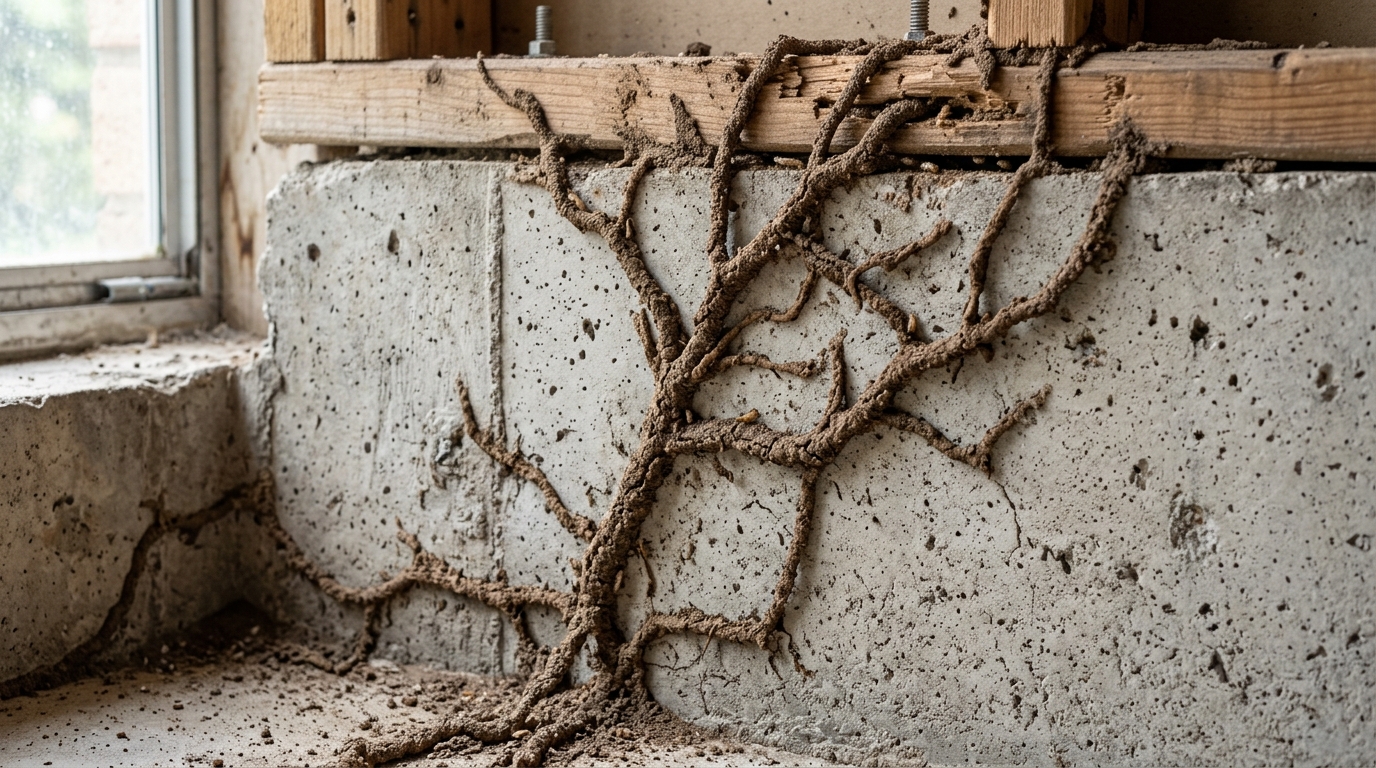
Termites are called "silent destroyers" because they feed inside wood — walls, floor joists, ceiling framing — without producing the visible surface damage that would alert a homeowner. By the time termite damage is visually obvious from the inside of a home, an infestation has typically been active for one to several years.
The signs exist, but they're specific and easy to miss if you don't know what you're looking for. This guide covers each location — walls, floors, ceilings — in detail.
Signs of Termite Damage in Walls
Walls are the most common location for interior termite damage because wall studs, plates, and sheathing run from the foundation up to the roof — giving termites a continuous wood pathway from the soil into the structure.
What to Look For
- Mud tubes on interior surfaces: If termites are active inside the wall, they sometimes emerge through small holes in drywall and build exposed mud tubes along the interior wall surface. These look like pencil-thin tubes of dirt stuck to the drywall. This is a definitive termite indicator.
- Small holes in drywall: Exit holes — small, round punctures in drywall, sometimes with a faint brown ring of frass (termite excrement) around them — indicate termites have been active inside the wall. These are often sealed over with paint in older homes, creating shallow, slightly discolored circles.
- Bubbling, peeling, or discolored paint: Moisture from termite activity inside the wall — termites bring moisture from the soil into their galleries — can cause paint to bubble or peel in localized patches. This is easily confused with water damage or a plumbing leak; the difference is that there's no water source nearby and no water intrusion pattern.
- Hollow sound when tapped: Sound structural wood produces a solid thud when tapped. Wood that termites have hollowed from the inside produces a papery, hollow sound. Run your knuckles along baseboards and lower wall sections — a change in sound can indicate internal damage.
- Soft spots in drywall: Press gently on drywall surfaces at floor level near windows, exterior walls, and corners. Drywall backed by damaged framing may feel soft or give slightly under pressure.
Signs of Termite Damage in Floors
Floor damage is common in pier-and-beam homes where floor joists and subfloor are directly above the crawl space. In slab homes, floor damage typically occurs in areas where moisture has accumulated — bathrooms, kitchens, laundry areas — where plumbing penetrations or leaks create conditions that attract termites.
What to Look For
- Squeaky or bouncy floors: New squeaking in floors that were previously quiet — particularly in localized spots — can indicate floor joist damage. A joist that has been weakened by termite feeding deflects more under foot traffic, causing movement in the subfloor above.
- Soft spots or spongy sections: Walk slowly across hardwood, tile, or vinyl floors and pay attention to areas that feel softer, springier, or give slightly underfoot. These indicate subfloor or joist damage below.
- Buckling or cupped hardwood: Hardwood flooring that develops localized cupping (edges higher than center) or buckling (sections rising off the subfloor) may indicate framing damage below. Hardwood reacts to moisture — but it also responds to subfloor deflection caused by weakened joists.
- Tiles cracking or loosening: Ceramic or porcelain tile installed over subfloor requires rigid support. When the subfloor or joist beneath becomes damaged, the tile loses support, cracks, or the grout fails. Single cracked tiles with no impact history can be a termite indicator.
- Frass accumulations on basement or crawl space floors: If you have access to a crawl space, look for small piles of frass — powdery, pellet-like termite excrement — directly below floor joists. These accumulate where termites have been actively feeding above.
Signs of Termite Damage in Ceilings
Ceiling framing damage is less common with native subterranean termites but is a documented sign of Formosan termite infestation. Formosan termites build above-ground carton nests — moisture-retaining structures made of chewed wood and soil — in wall voids, roof spaces, and attic framing. These nests can sustain large colonies above grade without continuous soil contact.
What to Look For
- Brown staining or discoloration on ceilings: Carton nest material retains moisture. When a Formosan nest is active in the attic or ceiling cavity, moisture often produces brownish staining on the drywall below — similar in appearance to a roof leak. If there is no corresponding roof leak or plumbing source, a termite inspection is warranted.
- Sagging ceiling sections: Localized ceiling sagging without a water source indicates either water damage or structural damage to the ceiling framing above. Either warrants investigation — and in Formosan territory (which includes most of East Texas), termites should be on the differential list.
- Swarmers emerging from ceiling voids: Termite alates (swarmers) that emerge from ceiling light fixtures, exhaust vents, or ceiling cracks indicate the parent colony is active in the ceiling cavity or attic framing above. This is a high-urgency signal — it means the colony is established inside the building envelope, not just in the perimeter soil.
How to Tell Termite Damage from Water Damage or Other Causes
| Sign | Termite | Water Damage |
|---|---|---|
| Paint bubbling | Isolated patches, no water source | Near plumbing or exterior penetration |
| Hollow wood sound | Clean galleries inside, often with mud lining | Rot, crumbles when probed |
| Ceiling staining | No corresponding roof or plumbing leak | Traces back to a leak source |
| Soft or spongy floors | Localized, away from plumbing | Near bathroom, kitchen, laundry |
The reliable way to distinguish termite damage from other causes is a professional inspection — a trained inspector probes the wood, looks for live activity or galleries, and can often determine the cause definitively. If you're seeing any of the signs described here in your Huntsville, TX area home, schedule a termite inspection or call 936-935-0197. We serve Walker County and surrounding East Texas communities.
What to Do When You Find Termite Damage
- Don't disturb it yet. Leave evidence intact for the inspector. Disturbing galleries or blocking emergence holes can make it harder to locate the colony.
- Take photos. Document the location, the visual appearance, and any frass or mud tubes present.
- Note when you first noticed it and what conditions (seasonal, after rain, etc.) it appeared.
- Schedule an inspection within the week. Damage that is already visible has been accumulating for some time. The sooner treatment is applied, the sooner the feeding stops.
Protect Your Home
Before It's Too Late
Licensed & insured termite specialists serving Walker County.
Same-day inspections. Honest pricing. No contracts.
Mon–Fri 7 AM – 6 PM, Sat 8 AM – 4 PM